


Embodied
Healing
Explore the barriers to feeling
Somatic Therapy and Bodywork in Montpelier, VT
I use an integrative approach, weaving Rosen Method Bodywork into my decade-long somatic psychotherapy practice. I also integrate techniques from Authentic Movement, Rosen Method Movement, massage, and dance.
Sessions & Rates
$175-90 Minutes
Sliding scale available upon request
For those who must travel a greater distance, supplemental virtual sessions are available for $150 and 2-hour intensives are available for $225. Please let me know if you are interested in these.
Pay it Forward
If you would like to support lower income clients accessing this valuable service, I invite you to contribute to the scholarship fund. Donations support my ability to offer deeply discounted sessions to those in need and can be made to @Claire-Diamond on Venmo with “Scholarship Fund” in the subject line.

Somatic Counseling:
I primarily utilize relational and somatic psychotherapeutic styles in my practice. Personal transformation is facilitated through embodied feeling with safe witness. Relationship heals and we are relational animals. Developing trust in the therapeutic relationship is vital for creating a container in which it is safe enough to be vulnerable, and thus to feel and grow. I invite you to bring in questions or concerns at any time in order to foster trust and safety in our work together.
Somatic means ‘of the body,’ and working in this style often helps us to access unconscious, yet tangibly felt, parts of ourselves. This often includes turning your attention toward sensation and emotion, exploring your relationship with your body, and exploring how you feel in your body.
Rosen Method Bodywork:
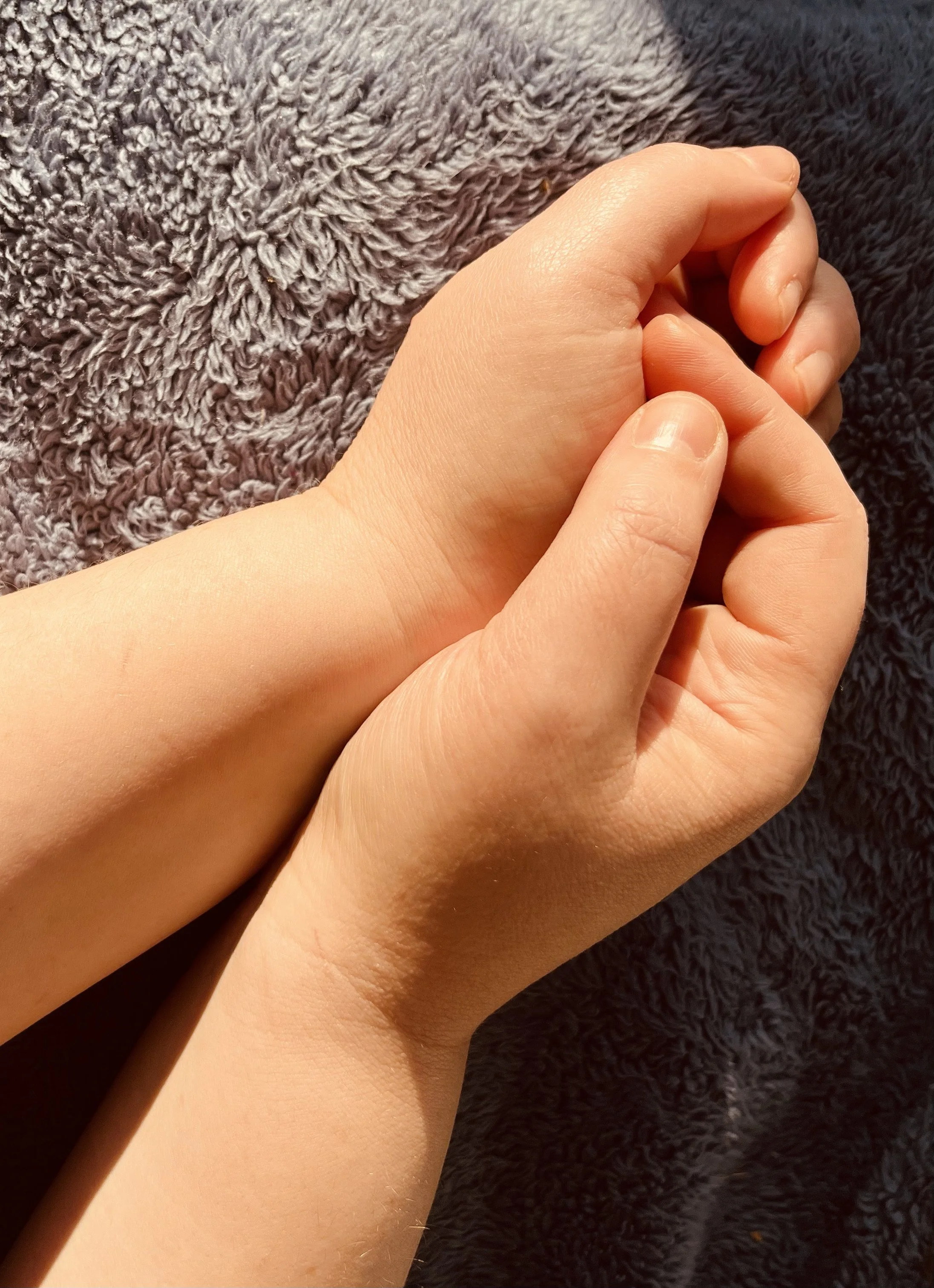
For many of us, talking about our challenges is not enough. Our traumas live in our bodies. Using both talk and touch, Rosen Method Bodywork grows our awareness of how and what we are holding. Muscle tension reveals how we have adapted around painful memories, emotions, and beliefs. Tension in the body has helped us cope, but now may limit our breath, relationships, and full sense of aliveness.
Rosen Method Bodywork uses a non-manipulative, listening touch to support you in growing sensory and emotional awareness. Sensing is our guide, the tangible path into feeling and accepting what is true. With this new embodied awareness, tension often softens from the inside out. As the unconscious becomes conscious, memories and emotions often arise for us to be with, support, and explore.
This is a collaborative process. You will be an active receiver on the table. If you choose to include touch work, I will do my best to go at your body’s pace. Consent is a conversation and I want to know about what works and doesn’t work for you. Please continue to let me know what you need to feel safe as your needs change.
Ready to start your healing journey?
Frequently Asked Questions
-
Please reach out to me on my contact page with a little bit about you and a few times you are available to have a free half hour phone consultation.
I will reply as soon as I am able to and we will take it from there!
-
Sessions vary widely based on clients’ differing needs. Touch most often happens on the massage table (and sometimes while sitting in a chair).
Rosen Method Bodywork typically uses a gentle, listening, non-manipulative touch that prioritizes connection. The touch can focus on what it’s like to be touched and it can also meet chronic threads of tension, supporting you in growing embodied awareness and letting go from the inside out.
As bodies soften, emotions, sensations, and memories often arise to be felt and explored. We use words carefully and compassionately, supporting you to stay IN the sensing.
When we’re not using touch, we explore emotion and sensation through counseling, as well as through self-touch, movement, and guided somatic experiences. No matter what tools we use, there will be a focus on building trust and safety in the therapeutic relationship.
-
Rosen Method Bodywork is touch that reaches for the person. Not every body part will be touched in a session. The touch is often gentle, with lots of holding. Sometimes the touch can feel deep or firm, but it does not push away the muscle tension in the way that massage often does. Rather, we are being with the tension and supporting you to grow awareness of it.
This awareness is embodied, not just in your mind, but through your felt sense. The growing of embodied awareness is the key to how we make change in Rosen Method. You have an active role on the table—noticing, feeling, sensing, and speaking to what is true so that you can bring it into your conscious awareness.
-
This work can be especially supportive for those experiencing trauma symptoms in their bodies, psychosomatic concerns (meaning a condition that affects both the emotions and the body), chronic pain, chronic tension, or for those who want a body-based approach to healing.
I love working with adults of all genders who want to learn how to feel into themselves and be in their bodies more. I also enjoy working with people who are growing their self-love and relational skills.
In many cases it can be of great benefit to pair this work with ongoing talk therapy from a different provider to create a robust team approach. I am always happy to provide referrals.
-
Because Rosen Method Bodywork can sometimes bring up traumatic emotions, body states, and memories, it is important that clients are stable and well supported in their lives. This work is contraindicated for those who are dealing with instability, psychosis, early sobriety, suicidality, and homicidality.
I am a somatic specialist and I do not do stability or crisis work. If I am concerned about your well-being and think you need a higher level of care, I will refer you to a more suitable practitioner.
-
For some clients, touch is loaded and it’s a big deal to be touched, especially by a stranger. Sometimes it takes a while for a client to be ready for touch and this sets the stage for very rich work.
It is also ok if we never use touch in sessions. Additional tools include counseling, self-touch, movement, and guided somatic experiences.
Please talk to me about your questions and concerns about beginning touch work. Our choices will depend on your needs and what you are focusing on in your personal growth and healing work.
-
When using touch, there are some different priorities to consider in choosing what to wear. The first priority is your comfort. Please wear what makes you the most comfortable. Loose, comfortable clothing works well. Jeans can be a bit too restrictive.
Some clients find great benefit in being touched directly on their skin, as it enhances sensation. These clients may choose to disrobe down to undergarments. If you’d like to try skin to skin but also want to feel covered up, consider trying a tank top and shorts. Whatever makes you the most comfortable will be best for our work together.
Rosen Method Bodywork is a dry technique, meaning there are no oils or lotions used.
-
In-person work can include touch and of course virtual work cannot. They both can include counseling, self touch, movement, and guided somatic experiences. I find virtual sessions to be supportive when clients live far away from Montpelier, but I find the work is most powerful in person.
For this reason, I don’t prefer to work exclusively virtually. In both virtual and in-person work, we use the immediacy of the emotions and sensations in the moment, inviting you to turn inward and sense your self.
-
For most sessions the fee is $175 for 90 minutes in person. Sliding scale available upon request.
Some people benefit from supplemental virtual sessions. These are $150/hr.
In some cases, people prefer to come for a 2 hour intensive for $225.
Please let me know if you are interested in virtual sessions and/or intensives. These can be well suited to those who have to travel a greater distance.
-
I no longer offer traditional psychotherapy and insurance has a limited definition of the services that they cover. Insurance certainly does not cover integrative touch work.
I used to take insurance and work more traditionally, but I’ve found that, unfortunately, health insurance in this country is exploitative for both clients and practitioners. It simply wasn’t working for me. I believe that healthcare is a human right and I offer a sliding scale to those who need it.
-
Yes! The building has an elevator and an accessible bathroom on the first floor. The massage table is wide.
We will chat about your masking and accessibility needs in our initial phone consultation. Please let me know about your needs and preferences and I will do my best to meet them.
I have an air purifier in the studio as well as in the waiting room, both from the brand Blue Air. I use a KN95 mask when I work at a client’s head and I am happy to wear a mask for the duration if that is your preference.
I do not require you to wear a mask, as it is important for me to see your facial expressions. If you are sick, please reschedule your appointment and I will do the same.
-
I believe embodiment work is critical to our collective success as we work in diverse ways toward sustainability and justice. Embodiment work connects us with ourselves, each other, and the earth. Our bodies are nature. And it is through our bodies that we have all of our experiences and relate to all things.
Our culture is sick—asking us to separate mind and body, to work past burnout, and to exploit ourselves, each other, and the earth. This oppression is experienced by most of us as traumatic, even if unconsciously so. To listen to our bodies inevitably invites us toward rest and healing. It invites us to have space for the ebbs and flows of our natural rhythms. It asks us to own and feel our truths.
Unlearning this oppressive enculturation in an embodied and relational way can support us, both personally and collectively, toward peace, justice, connection, and sustainability.
Accessible Studio Space
My studio, located in downtown Montpelier, VT, feels warm and spacious, with views of Hubbard Park.
There is a couch and a massage table (with table warmer!) and lots of pillows. There is a bathroom inside the studio that you are welcome to use. There is also an accessible bathroom on the first floor of the building on the Langdon Street side.
You can choose between the stairs or elevator to take you to the third floor where the office is located. The waiting room has beautiful art and we’ve got great neighbors.
Please let me know of any additional supports you need and I will do my best to accommodate.